On the last day of November 1910, a twenty-one-year-old woman from a sand-road village
in Austrian Galicia stepped off the steamship Friedrich der Grosse at Ellis Island. The
inspector wrote her onto the first line of the page: Aniela Pchelka, married, of Kłyżów,
going to husband Andrzej. She had crossed alone. Behind her, in the parish ground of
Pysznica, she left two small graves - both of them daughters, both of them named Katarzyna.
Ahead of her was a man she had not seen in twenty months, a cold-water flat in New Jersey, and
the whole of the rest of the family's American story.
Everything on this page runs backward and forward from that morning. Backward through the
parish books of Pysznica - which survived a church fire, two world wars, and an occupying army -
to log houses on the edge of the Sandomierz Forest in the 1810s. Forward through Garfield and
Bayonne to Jan and Władysława - Grandpa John and Grandma Pat - and on through their five
children to the seventh generation: down to Adrian Pelka, the newest of the line, born the
very day this page first went out to the family, in August 2026. Seven generations, and
still counting.
What is documented and what is family belief are marked throughout, and sorted honestly at
the end.
Seven generations, one name slowly shedding its letters: Pchełka → Pchelka → Pelka.
The surname means, literally, little flea - a classic Polish peasant nickname-surname,
the diminutive of pchła. It is one of the rarest names in Poland: about 149 bearers in
the world, every one of them in Poland, and the densest cluster still sits in the two counties
around Kłyżów. In America the impossible opening cluster Pch- was quietly dropped, and
the family became Pelka. In a small joke of history, the identical-looking Russian surname
means "little bee."
c. 1810s
Tomasz Pchełka & Elżbieta Wiercińska · Jakub Surowaniec & Marianna Słomienna
Farmers of Kłyżów and Pysznica parish. Named in their grandson's 1877 birth act - the oldest ancestors the record has yet surrendered. The Surowaniec family had been in Kłyżów since at least 1761.
m. ~1870s
Jakub Pchełka & Katarzyna Surowaniec · Jan Maziarz & Katarzyna Mazur
Katarzyna Surowaniec died of consumption in 1885, aged 34 - her son Andrzej was seven; Jakub remarried within months and lived at house 153 until 1924. On the other side, Aniela's own birth act names her grandparents too: Marcin Maziarz & Katarzyna Surowaniec, and Andrzej Mazur & Ewa Augustyn - the same few families, braided twice.
1877 · 1889
Andrzej Pchełka (b. 21 Nov 1877, house 153) & Aniela Maziarz (b. 18 Jun 1889, house 106)
Married 1 March 1905 in the wooden church of Pysznica - the act survives, with her father's consent recorded and the two witnesses signing X. The emigrants. He sailed 1909; she followed 1910. His sister Antonina had married three weeks before him.
1920
Jan "Jasiek" Pelka (b. 13 May 1920, Garfield/Paterson, NJ) & Władysława "Pat" Patryn (b. 28 Nov 1920, Bayonne, NJ)
Grandpa John and Grandma Pat - both born American, eleven weeks apart, to Galician parents from villages 150 km apart who never knew each other in Poland.
1949 →
John · Debbie · Kiki · Bruce · Cynthia
The five children of Pat and John - born New Jersey, the diner years and after. John came first: he is the "John T., age 1" on the 1950 census page, in the same household as his widowed grandmother Aniela.
2026
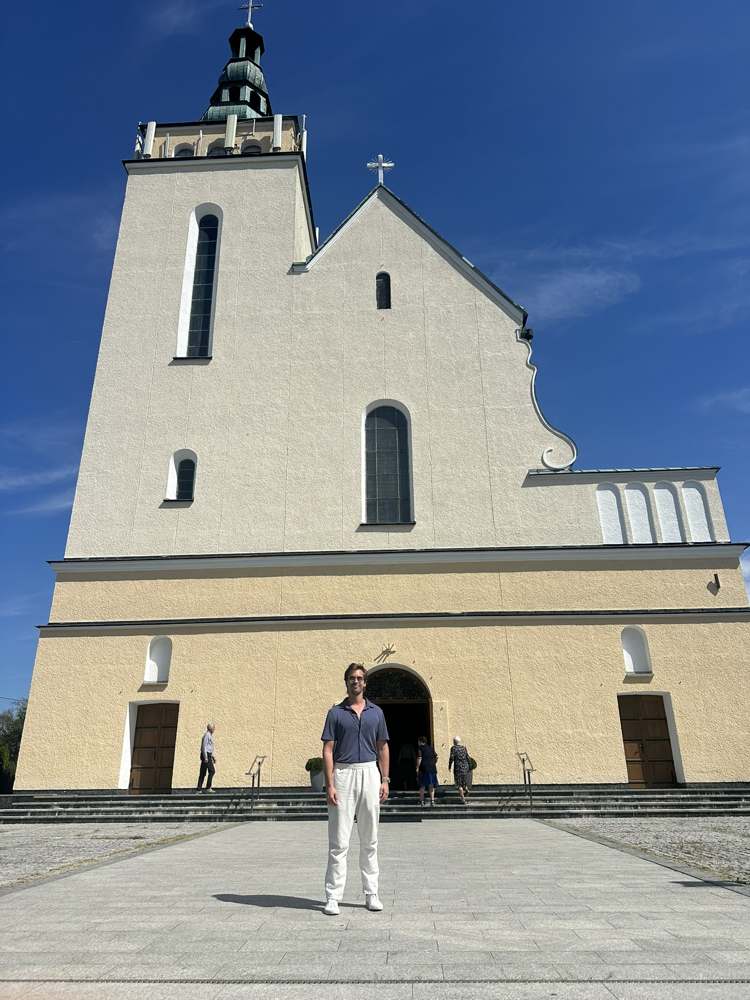
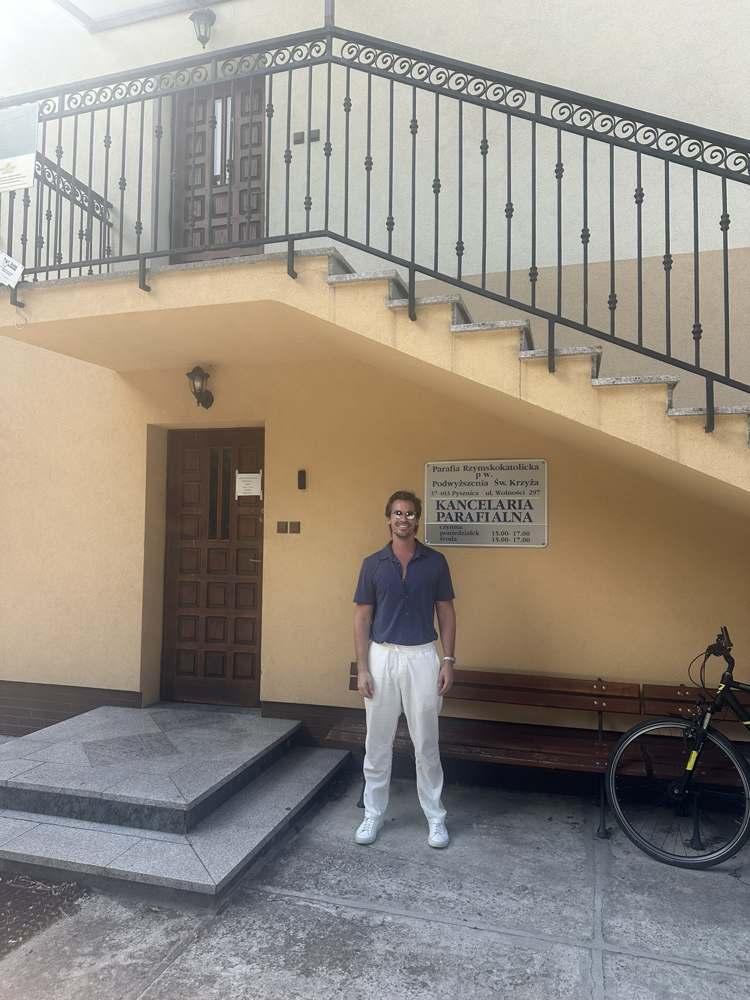
Zach Pelka, John's son, stands in front of the Pysznica church
The next generation - and the first of the American line known to return. Chapter VII.
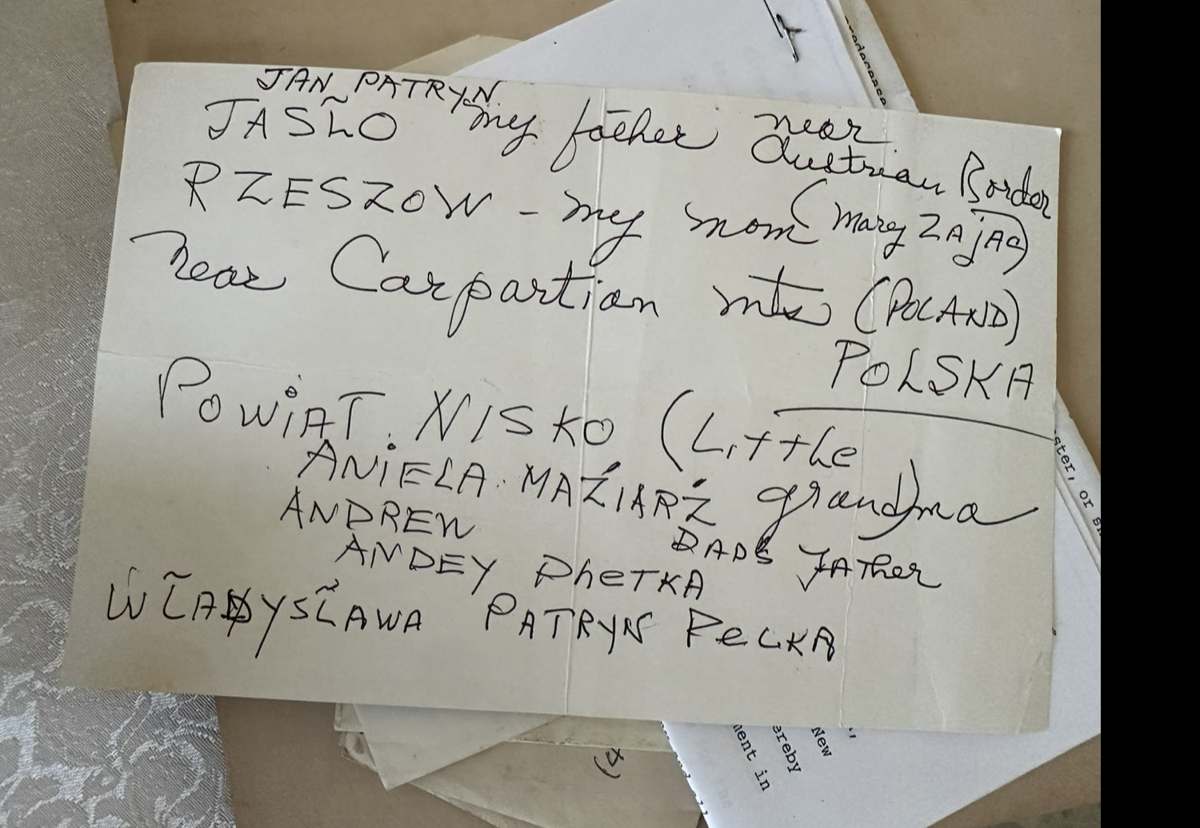
Plate I · The founding document
Grandma Pat's handwritten note, the origin of this whole research. Her "ANDREW PHETKA" was treated
for weeks as an error to be decoded. It was, in fact, the most accurate record in the family's
possession: Ph approximates the Polish Pch-, and the t is a
misread ł. Grandma Pat, writing a name she had heard rather than read, beat two rounds
of archival theory.
The tree in full
Everything the record has yet surrendered, on both sides, down to Pat and John's five
children. Scroll sideways on a phone.
First generation · the oldest names the record holds · born c. 1810s, Kłyżów & Pysznica
Tomasz Pchełka & Elżbieta Wiercińskafarmers
Jakub Surowaniec & Marianna Słomiennafarmers
Marcin Maziarz & Katarzyna Surowaniec
Andrzej Mazur & Ewa Augustyn
Second generation · born c. 1840s–1860s
Jakub Pchełkac. 1841 – 1924, house 153& Katarzyna Surowaniecc. 1851 – 1885, consumption, at 34
Jan Maziarzd. before 1926& Katarzyna Mazurd. 1926, house 224, widowed
Jan Patryn & Maria Zającof Godowa / Strzyżów country, 150 km south; the other line, which meets this one in New Jersey
Third generation · the emigrants · born 1877–1889
son of Jakub & Katarzyna · m. 1 Mar 1905, Pysznica
Andrzej Pchełka21 Nov 1877, Kłyżów – 1941, Garfield NJ& Aniela Maziarz18 Jun 1889, house 106 – 1967 NJ, or 1959 Pysznica (mystery No. 1)
their siblings · stayed in Poland
Antonina Pchełkab. 1880, m. Leon Ogonowski 1905Tekla & Stanisław Maziarzb. 1891, 1895 - Aniela's siblings
Fourth generation · born 1906–1931 · the first Americans
children of Andrzej & Aniela
Katarzyna · Katarzyna1906–07 · 1908–09, the aniołki of Pysznica
Jan "Jasiek / John" Pelkab. 13 May 1920, Garfield/Paterson NJ
Peter · George · Andrew · Frank · Joseph · Bruno · Violetb. ~1914–23, Garfield
children of Jan Patryn & Maria
Władysława "Pat" Patrynb. 28 Nov 1920, Bayonne NJ
Helen · RolandHelen b. ~1931, waitress at the family diner, 1950
The union · married New Jersey · the diner at 19 Frederick Place, Bergenfield, 1950
John Pelka & Władysława "Pat" (Patryn) Pelka
Fifth generation · the five children of John & Pat
John Pelkam. Christine Chapman
Debbie Pelkam. Jim Carver
Kiki Pelka
Bruce Pelkam. Donna Guerin
Cynthia Pelka
Sixth generation · first cousins
John & Christine's
Zach Pelka
Jen Pelkam. Charles Bililies
Debbie & Jim's
Jim Carver
Patrick Carver
Kiki's
Quinn Arevalo
Brooke Arevalom. Yariv Lapid
Bruce & Donna's
Jonathan Pelka
Austin Pelkam. Alexandra
Cynthia's
Cole Morrissey
Madison Morrissey
Hazel Morrissey
Zeke Morrissey
Seventh generation · second cousins
Brooke & Yariv's
Daphne Lapid
Benjamin Lapid
Johnny Moses Lapid
Austin & Alexandra's
Asher Pelka
Audrey Pelka
Adrian Pelkab. 24 Aug 2026, the day this page went live
Each row is one generation: side by side on a row means cousins, inside one
labeled group means siblings, and the red-edged cards trace Zach's direct line. Everything
here belongs to living memory as much as to the record. Compiled by John's son Zach -
corrections and birthdays welcome.
Chapter Two
II · The village
Kłyżów, on the sand at the edge of the forest, within a walk of the edge of the map.
In 1606, two years after its first appearance in any record, Kłyżów consisted of
fourteen farms, a tavern, and a mill. Three hundred years later it was still a place you had to
leave to survive. The village sits in the northern Sandomierz Basin on soil that is mostly
sand - literal inland dunes under pine forest - at the western edge of the great Lasy Janowskie
woods. The little river behind the fields, the Bukowa, was from 1815 to 1918 the actual border
between the Austrian and Russian empires. The family lived their whole Polish lives within
walking distance of the edge of the map.
They were Lasowiacy - "people of the forest" - an ethnographic world of its
own: log-built houses, rye, oats and buckwheat scratched from sand, forest beekeeping, tar-making
and bog-iron smelting, linen shirts embroidered in white, black and red. Andrzej's birth act
records the family's station in one Latin word: agricola, farmer. His parents' world was
Galicia - the poorest crownland of Austria-Hungary, "the poorest province in Europe" in one
historian's famous verdict, where average income ran 53 Rhine guilders a year against 450 in
England, and where an 1868 law dividing land equally among all sons ground farms down, generation
by generation, to plots too small to feed a family. Galician peasants renamed their own province
Golicja i Głodomeria - Bareness and Starvation. Between 1880 and 1914, close to 750,000
of them crossed the Atlantic.
Fourteen farms, a tavern and a mill - and after three hundred years, still a place you had to leave.
A digression: the parish, and how it worked
Kłyżów had no church of its own from 1604 until 1974. Every baptism, wedding and funeral meant
the same journey: about five kilometres north to the parish church of Pysznica - an hour on foot,
thirty-five minutes by horse cart, along the forest edge. The parish had been erected by royal
charter in 1569; the church the family knew was its third wooden church, built 1784.
Every family sacrament in this story happened inside that timber building - and it burned to the
ground, with its bell tower, in the fighting of 1914. The registers survived because they were
kept in the brick rectory across the road. The cream-colored stone church that stands today
(1924–31) is one the emigrants never saw.
The books
Parish registers survive from 1760 - baptisms, marriages, deaths, kept in Latin, each birth entry naming two full generations.
The book of souls
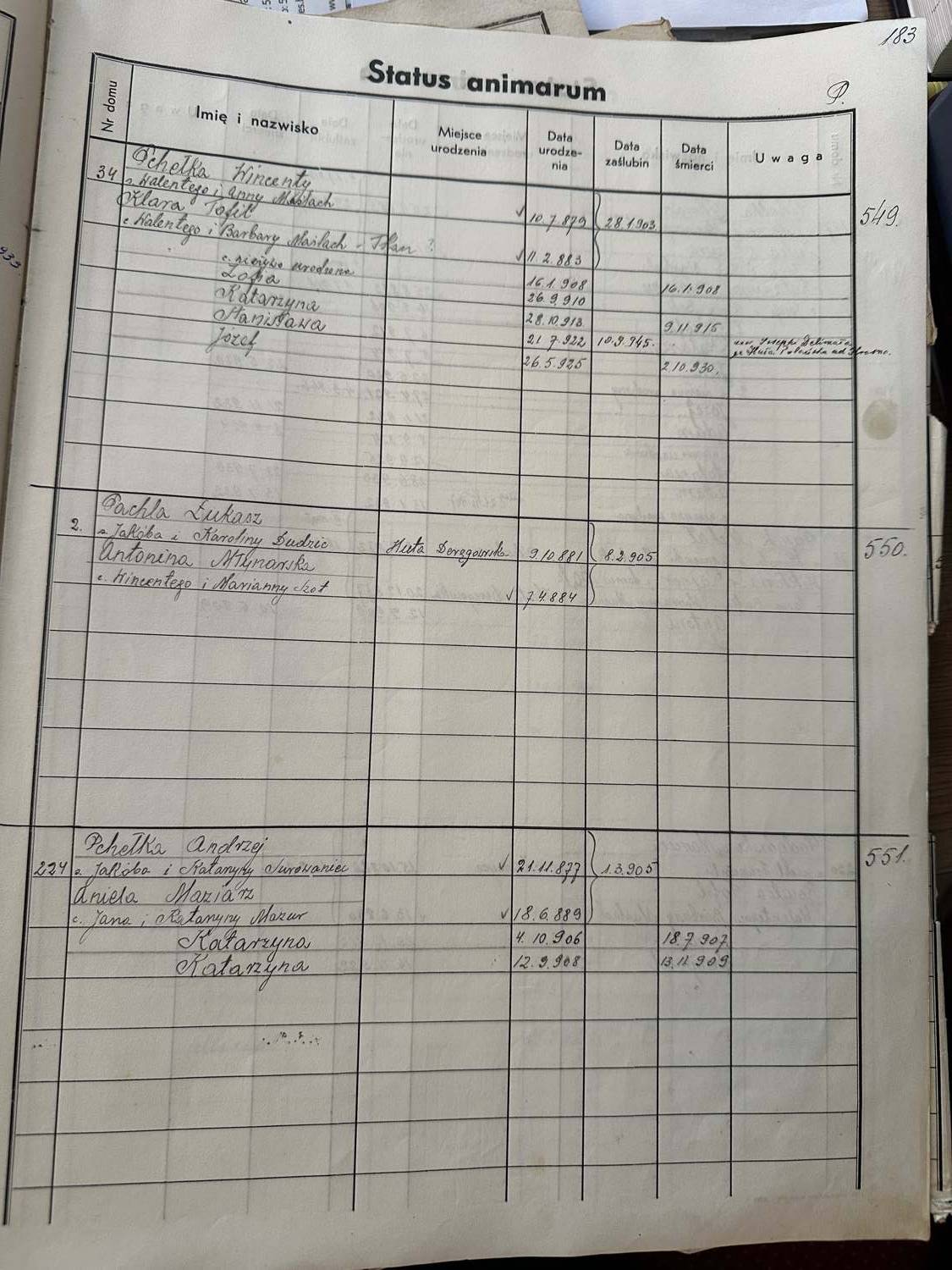
Alongside them, the status animarum - a house-by-house census of every family, required by the Church since 1614. The family's page is house 224.
House numbers
Andrzej was born in house 153; the family book later lists house 224 - Galician villages numbered houses in order of building, not location.
The rectory
Built 1906; it protected the registers through two wars - and ran a second, secret life in the 1940s (Chapter VI).
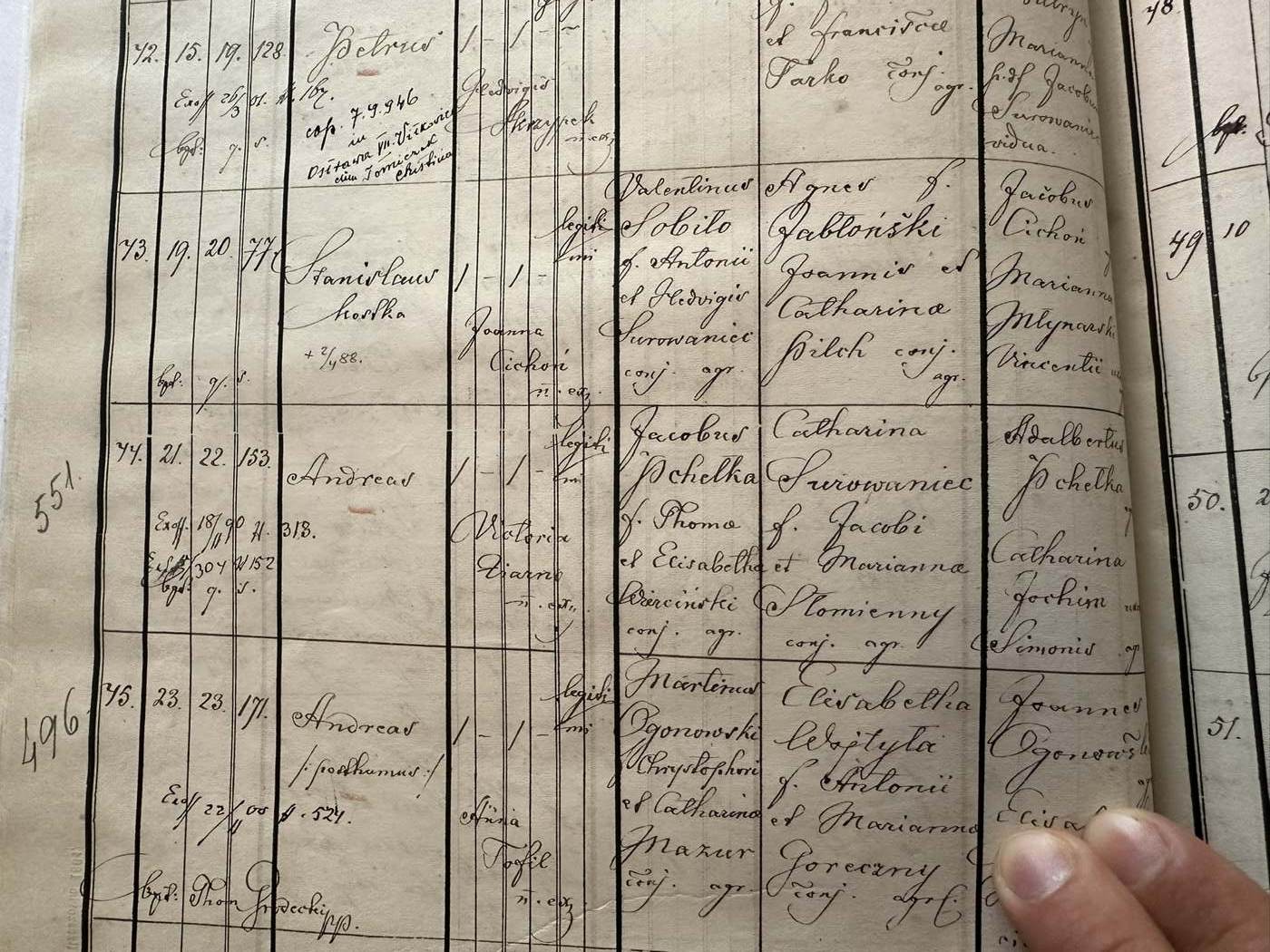
Plate II · The book of souls
Status animarum of Pysznica parish, page 183, photographed at the parish office, 20 August 2026.
Entry 551, house 224, is the family: Andrzej, Aniela, and two daughters. Entry 549, house 34, is
his cousin Wincenty's household. One open page, three generations of questions answered.
Chapter Three
III · Marriage, and two small graves
1 March 1905 - the last week of Carnival. Then July 1907. Then November 1909.
Andrzej Pchełka married Aniela on the first of March, 1905, in the wooden church at
Pysznica. He was twenty-seven; she was fifteen years and eight months old. That sentence deserves
its honest context: the Church's minimum age for a bride was then twelve; Austrian civil law
required only her father's consent; and in a province where eighty percent of farm plots could not
feed a family, men waited years for land while their brides did not. Even so, the scholarship is
clear that most peasant women married in their twenties - Aniela was strikingly young even for her
time and place. The date itself carries village logic: the first of March 1905 fell in the last
week of Carnival, the traditional wedding season, one week before Ash Wednesday closed the
church to celebrations for Lent.
Their first daughter, Katarzyna, was born 4 October 1906 - and died 18 July
1907, at nine and a half months, in high summer, the season when "summer diarrhea" was the
leading recorded killer of infants across the Western world. Their second daughter was born
12 September 1908, and they gave her the same name: Katarzyna. Across Catholic
Central Europe, parents routinely gave a dead child's name to the next child of the same sex -
an act of continuity, not forgetting. And the name did double duty: both of the babies'
grandmothers - Katarzyna Surowaniec and Katarzyna Mazur - were Katarzynas. Two attempts to hand
one name down three generations.
The second Katarzyna died 13 November 1909, fourteen months old - of measles, the register
says, at house 224; and the same entry notes what the whole village knew: her father was
already in America. In the empire those girls were born into,
roughly one baby in five died in its first year; that fact makes their deaths ordinary, and it
makes nothing about them ordinary. Both were buried as aniołki - "little angels," in the
folk term - under small wooden crosses in plots the parish quietly reused within a generation,
which is why no trace of either grave survives, and why none should be expected.
By the time Aniela boarded her ship she was twenty-one, and everything she had lost stayed in Pysznica ground.
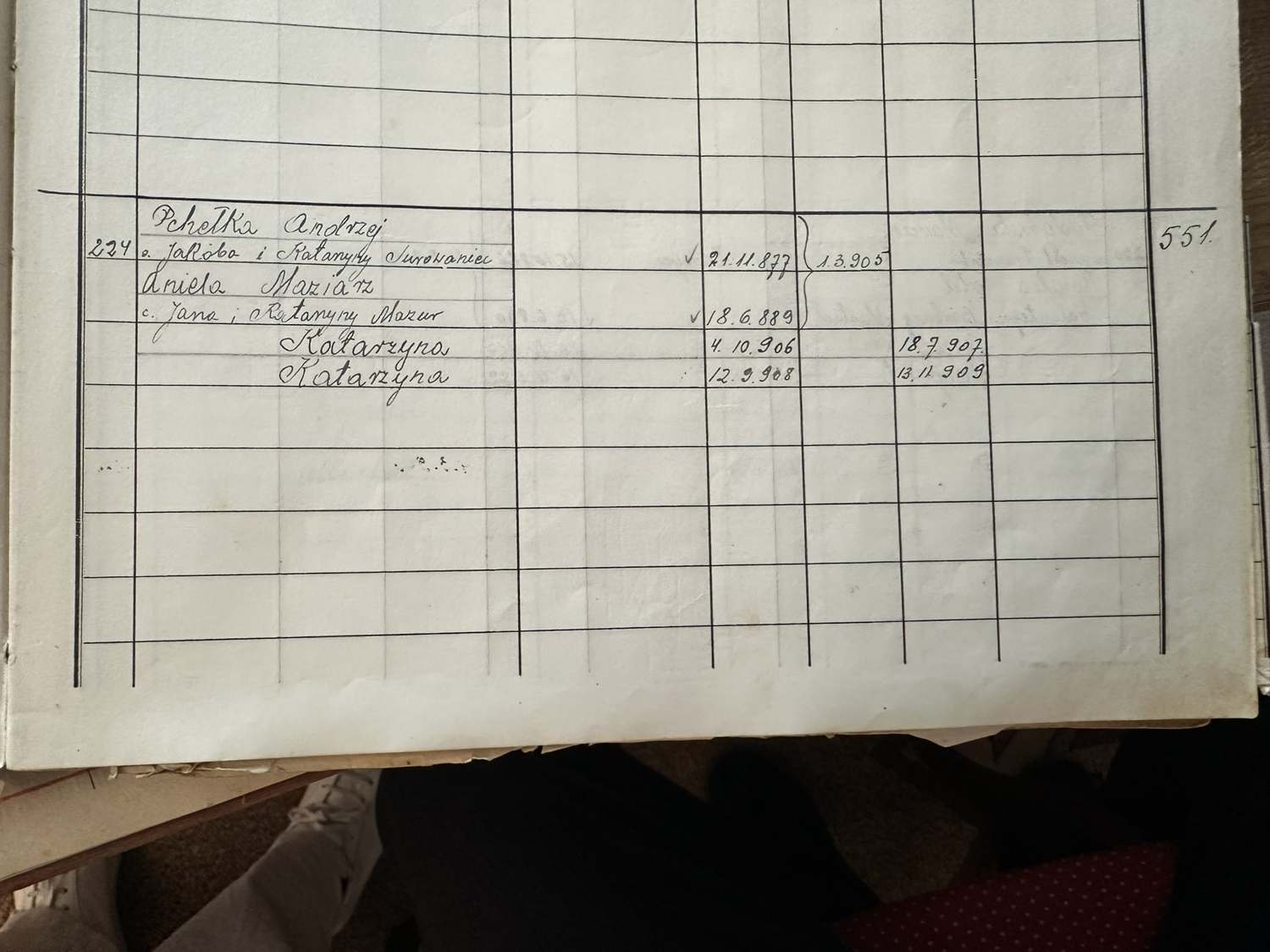
Plate III · Entry 551, house 224
The family's own entry, in the parish clerk's hand: Pchełka Andrzej, s. Jakóba i Katarzyny
Surowaniec, ur. 21.11.877 - ślub 1.3.905 - Aniela Maziarz, c. Jana i Katarzyny Mazur, ur.
18.6.889 - then the two Katarzynas, each with two dates far too close together.
Chapter Four
IV · The crossing
Bremen to New York: six Pchełkas in March 1909, and one alone in November 1910.
Andrzej did not emigrate alone. On 23 March 1909, six Pchełkas from the one village
of Kłyżów walked off the SS Prinz Friedrich Wilhelm at Ellis Island together - Andrzej at
line 26 of the manifest, nineteen-year-old Agnieszka one line below him, Franciszek four lines
down, with Józef, Adam and Amela on the same page. A whole strip of the village moved at once.
His ship was practically new - nine months past her maiden voyage. Three years later she would be
one of the liners in the vicinity the night the Titanic went down.
He left a wife and a six-month-old daughter. That November, the baby died with her father an
ocean away. Aniela buried her second child, waited out a year, and boarded the
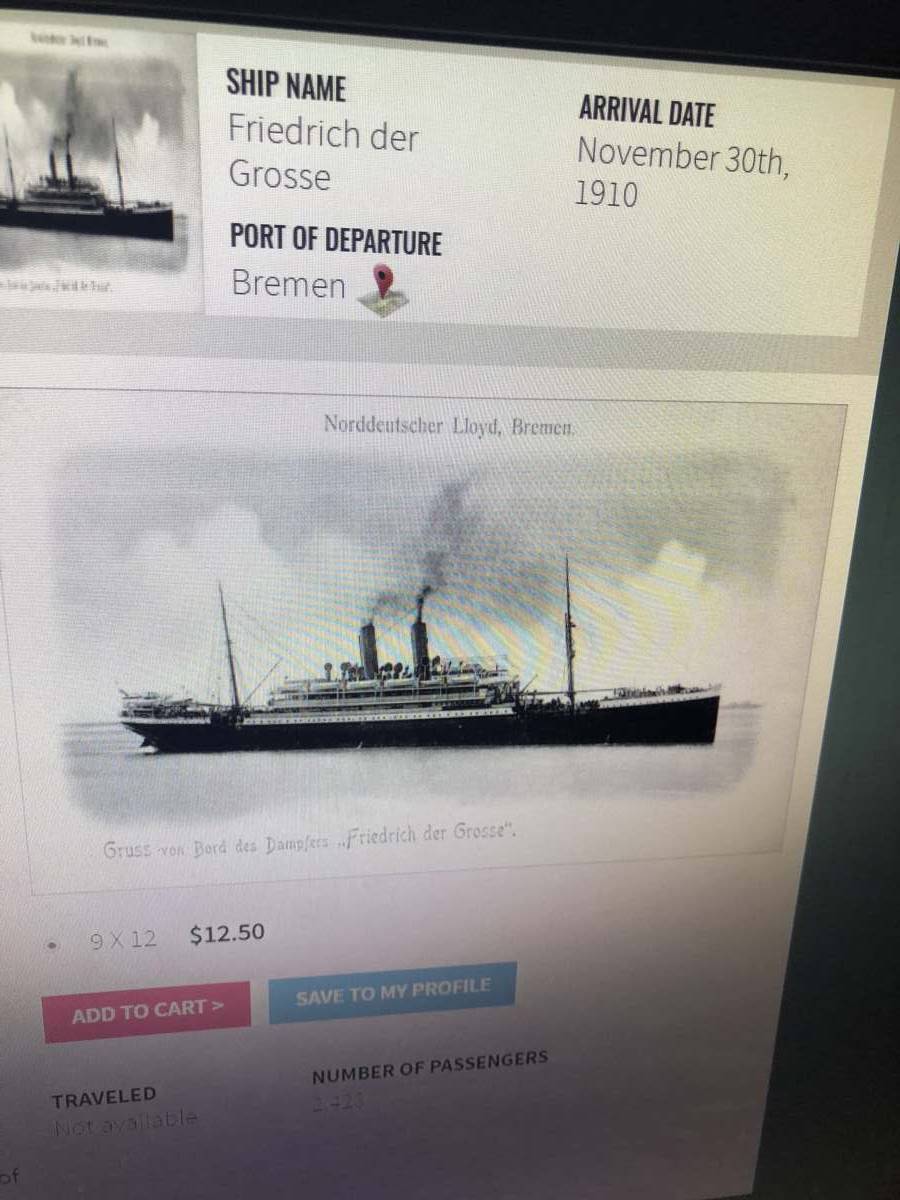
Friedrich der Grosse at Bremen - the same route, the same shipping line. She landed at
Ellis Island on 30 November 1910: St. Andrew's Day - her husband Andrzej's
name day. Whether she planned it or the calendar simply smiled, she reached him on the feast of
his name. Every family
crossing, 1909 to 1912, was Norddeutscher Lloyd out of Bremen, on ships named for the Hohenzollern
court: Polish peasants from Austrian Galicia riding the German Kaiser's namesake liners to
America. The trains that started those journeys ran from Nisko station - opened 1900, steel
younger than their marriage.
List or Manifest of Alien Passengers · S.S. Friedrich der Grosse · sailing from Bremen · arriving Port of New York, Nov 30, 1910
No.
Name in full
Age
Married?
Last residence
Going to join
1
Pchelka, Aniela
21
M
Klyzov, Galicia
husb. Andrzej Pchelko, - Ave.
2
.
.
.
.
.
3
.
.
.
.
.
Her whole entry: one line, first on the page. The street address is half-lost to
the microfilm; recovering it is on the list. A Katarzyna Pchełka appears on the
same page - even on the crossing she was not entirely alone. NARA T715; photographed at Ellis
Island, 17 August 2026.
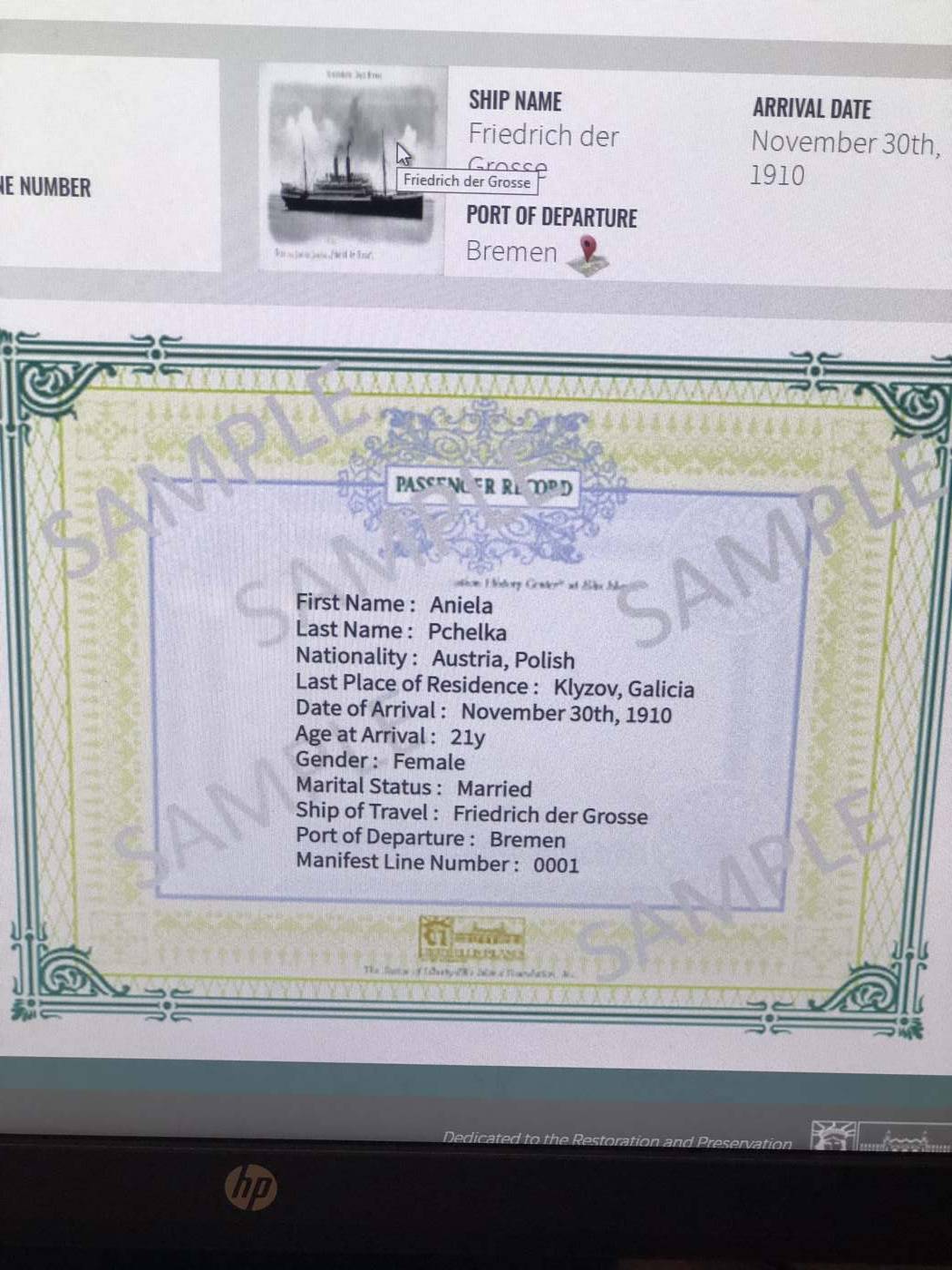
Plate IV · The record
Aniela's arrival record at the Ellis Island kiosk - the single document that recovered the true
surname and the true village, 115 years after the fact.Plate V · The ship
The Friedrich der Grosse, Norddeutscher Lloyd. Ten thousand tons, up to 2,200 in
steerage; by law, thirty-six square feet per passenger.
They left towards a letter - his, from New Jersey, with a prepaid ticket folded inside.
Not every emigration held. Cousin Wincenty and his wife Klara sailed from Kłyżów in November
1910 - eight days before Aniela - tried America, and were back in the village by 1913, where two
more of their children were born. Emigration ran in both directions, a fact that will matter
again in the mysteries.
Chapter Five
V · New Jersey
Garfield: wool mills, a Polish parish, and five brothers born American.
The New Jersey the Pchełkas landed in was a Polish country of its own: the worsted
mills of Garfield and Passaic - Botany, Forstmann & Huffmann, Garfield Worsted - ran on
Galician hands, ten-hour days at piecework. The name shed its flea: Pchełka became Pelka at the
mill gate and the parish desk. The children came American, from about 1914 onward: the brothers
Peter, George, Andrew, Frank and Joseph of the 1950 Garfield censuses, plus - from the family's
own memorial records - a sister, Violet, and one more brother,
Bruno (b. 1922), whose World War II enlistment card surfaced independently in
the Army's files. In the middle of that cohort: Jan "Jasiek" Pelka, born 13 May
1920 - Grandpa John.
And then, in April 1950, the census enumerator knocked at 19 Frederick Place,
Bergenfield, and wrote down a whole world: John Pelka, 29, proprietor of a
diner - Grandpa John, running his own lunch counter; his wife Wladyslawa, 28 -
Grandma Pat; their one-year-old son John T. - the next generation of this story;
Pat's teenage sister Helen, waitressing at the family diner; a twelve-year-old niece; and, in
the last line of the household, Nellie, 62, widowed, born Poland - Aniela
herself, a widow since 1941, living in her son's house, still never naturalized after
forty years in America. The burial listings of Saint Peter's Greek Catholic Cemetery,
Garfield, the cemetery family memory always named, read Andrew Pelka,
1878–1941 and Nellie Pelka, 1889–1967, side by side; though a tended grave in
Pysznica keeps one question about Aniela's final chapter honestly open (see the
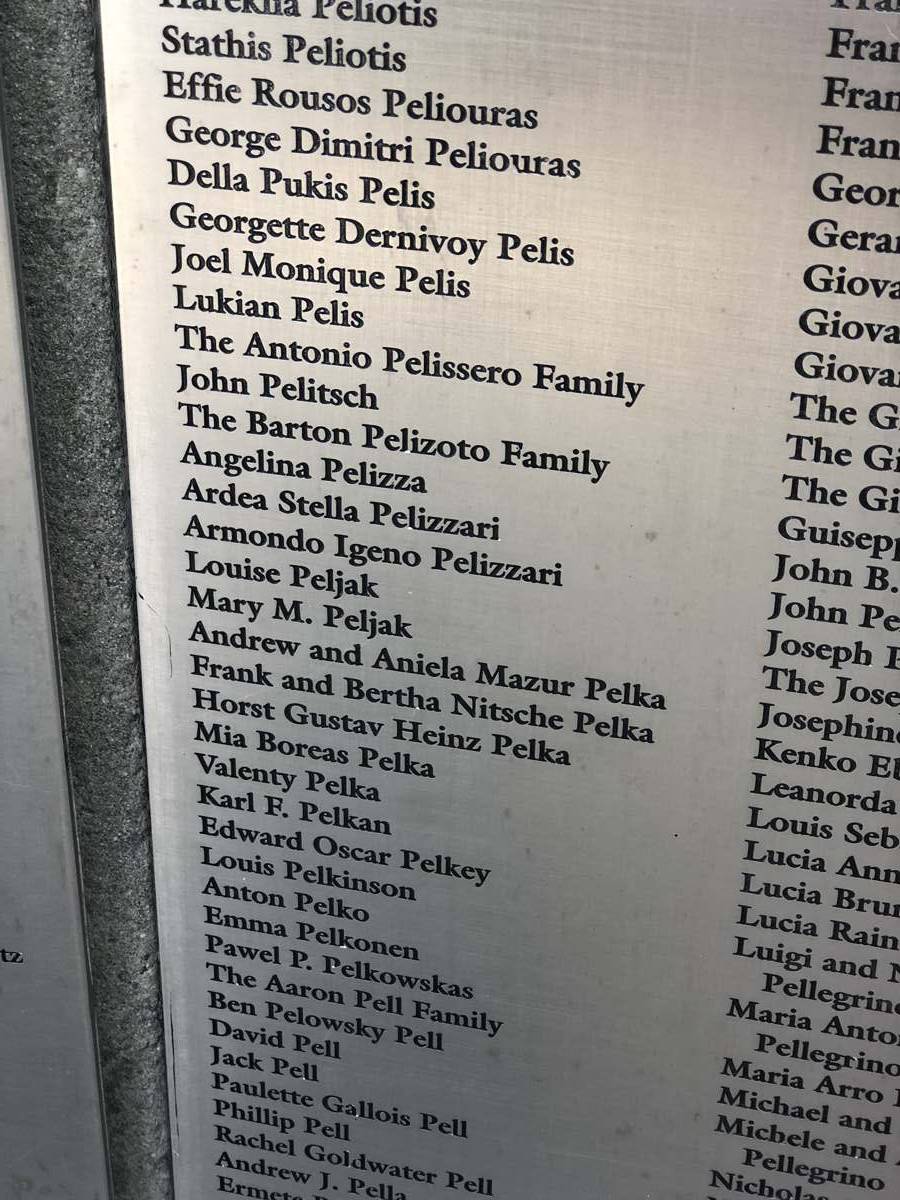
mysteries). On the Wall of
Honor at Ellis Island, the family later fixed both names in steel:
Andrew and Aniela Mazur Pelka.
Plate VI · The Wall of Honor
The American Immigrant Wall of Honor, Ellis Island: "Andrew and Aniela Mazur Pelka." Note the
maiden name - Mazur here, Maziarz in the family papers. Her birth act settled
it: father Maziarz, mother née Mazur. The family memory preserved both truths without knowing
it (see mysteries, No. 2).
A digression: the other line - Patryn
Grandma Pat's parents, Jan Patryn and Maria Zając, came from a different
Galicia - the Carpathian foothill country around Strzyżów and Godowa, 150 km southwest of Kłyżów
(the family's remembered "Jasło" was the old administrative district, and the memory was better
than the first research gave it credit for). The Patryn name is nearly as rare as Pchełka -
a few hundred bearers, concentrated exactly there. The best candidate arrival is a Jan Patryn of
Godowa, landed 31 May 1900 off the SS Barbarossa - a sister ship, the same Bremen line -
though his age sits awkwardly and the identification is held loosely. What is certain: the
family settled in Bayonne, where the Polish parish of Our Lady of Mt. Carmel
grew into one of the largest Polish congregations in America, and where the Standard Oil
refinery's mostly-Polish workforce staged the famous strikes of 1915–16, with strikers shot dead
in both years. Into that world, on 28 November 1920, Władysława Patryn was born -
Grandma Pat, eleven weeks younger than the Garfield boy she would marry.
Jan & Władysławam. New Jersey · where the two lines become one
Two American children of two Galician villages that never knew each other. From here the
story is the family's own: five children, twelve grandchildren, and a seventh generation
that grew by one on the day this page was finished - welcome, Adrian Pelka. The full tree
is in Chapter I, and it is built to keep growing.
Chapter Six
VI · Those who stayed
The wars came to the exact fields the family left - twice.
Four years after Aniela's ship left Bremen, the war arrived at the riverbank she had
left. In the autumn of 1914 the Battle of Rudnik was fought thirteen kilometres from Kłyżów; when
it was over, tens of thousands of soldiers of both empires lay buried in the squares of one small
San river town, and the wooden church of Pysznica - the church of the family's every
sacrament - had burned with its bell tower. The front passed over the parish twice within eight
months. Trenches from that war are still visible in the ground around Kłyżów.
The second war was worse. On 18 October 1939, Adolf Eichmann stood on the platform of Nisko
station - three and a half kilometres from Kłyżów - and delivered a "welcome speech" to a
thousand Jews deported from Vienna: the first organized Nazi deportation of Jews anywhere on
earth began within sight of the family's fields. On 10 July 1943 the Germans pacified Zarzecze,
the next village over, deporting a hundred men to the camps - the village still keeps the
anniversary as the "Sunday of Tears." And on 14 June 1944, twenty-two kilometres away at
Porytowe Wzgórze, some three thousand partisans held off thirty thousand Germans in the largest
partisan battle ever fought on Polish soil, then broke out through the ring after dark. Men of
the family's own gmina fought in it.
Two priests kept the family's books through it all. Ks. Ignacy Pyzik,
pastor 1906–1942, is the hand behind the saddest entries - he baptized both Katarzynas and
buried them, and was still pastor when Aniela walked out of Kłyżów for the last time. His
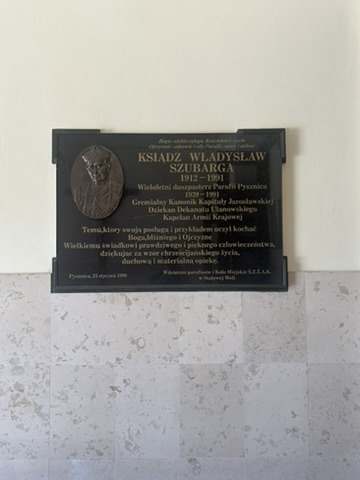
curate-then-successor, Ks. Władysław Szubarga - "Tata," Dad, to the whole
parish - arrived in April 1939, months before the invasion, became pastor in 1942, and stayed
until his death in 1991. Chaplain of the Armia Krajowa, the Polish Home Army, he ran the 1906
rectory as a clandestine hospital: one May night in 1944 his curate found ten men in Polish
uniforms in the corridor, two soaked in blood. He was taken hostage by the Germans in 1941,
survived the camps at Budzyń and Zamość in 1943, survived fourteen armed raids on the rectory,
and once fled the village because drunk Soviet soldiers meant to kill him. The registers this
whole history is built on passed through his hands, and through the war, unburned.
Plate VII · "Tata"
The parish's memorial to Ks. Władysław Szubarga (1912–1991): pastor 1939–1991, canon, dean,
Kapelan Armii Krajowej - chaplain of the Home Army. Erected by "grateful parishioners
and the AK veterans' circle of Stalowa Wola," 1999.
The family missed the wars by four years - and the village wrote them into its soil.
Chapter Seven
VII · The return
August 2026: an Ellis Island kiosk, an open parish book, a cemetery under the pines.
One hundred and sixteen years after Aniela landed, her great-great-grandson walked
the route in reverse. On 17 August 2026, at Ellis Island, the kiosk surrendered her arrival
record - and with it the true surname and the true village, ending in one afternoon a search
that two generations of family papers had never cracked. Three days later, on 20 August, a
driver, a parish secretary, and an open book did the rest: the status animarum at house
224, Andrzej's original 1877 birth act with two more generations folded inside it, and a
cemetery under the pines where the same dozen surnames - Pchełka, Mazur, Surowaniec, Maziarz -
still keep company on the stones.
Plate VIII · Pysznica, 20 August 2026
The great-great-great-grandson of Tomasz Pchełka and Elżbieta Wiercińska - the oldest names
the record holds, farmers here in the 1810s - stands at their parish church, six generations
on: Tomasz → Jakub → Andrzej → Jan → John → Zach. The stone church of 1924–31 was built
after the emigrants left, on the site of the wooden one that held their weddings and
funerals; the parish itself is the one thing in this story every generation has stood in.Plate IX · Entry 44
The Liber Natorum for November 1877, open to Andrzej's birth: parents, grandparents,
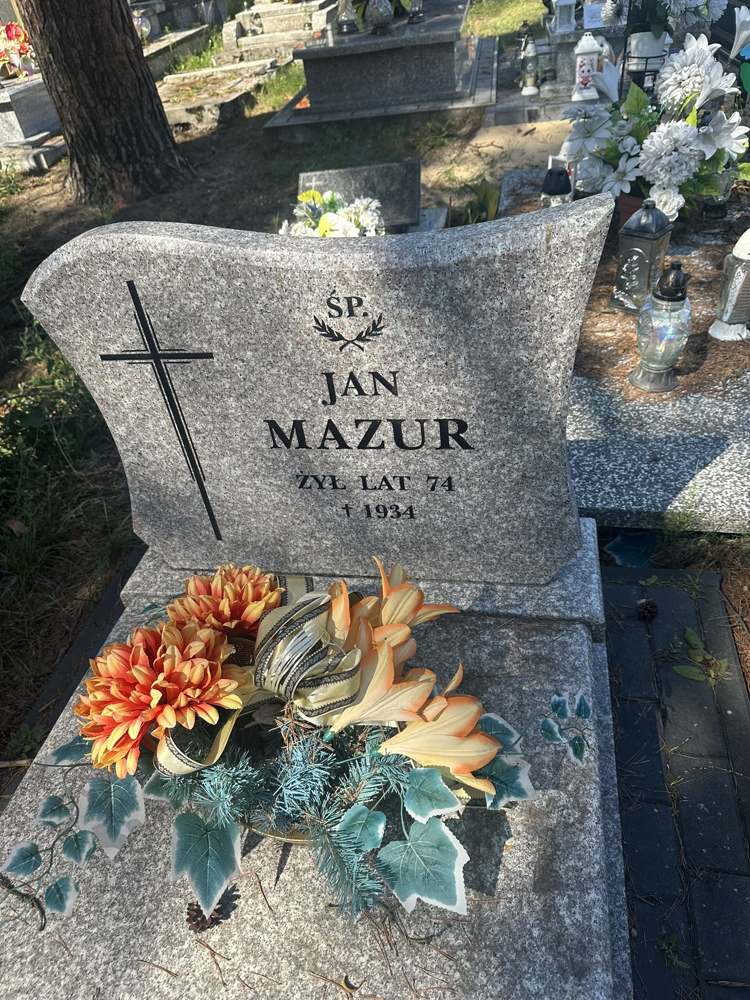
godparents, house 153 - and a margin note showing an extract issued in 1890.Plate X · Sector D, grave 1612
"ŚP. Jan Mazur, żył lat 74, †1934." Is this Aniela's father? Probably not, though the
question is fair: her birth act names her father Jan Maziarz, and her mother's
1926 death entry records her as a widow, meaning her Jan was gone before this man died in
1934. But the village swapped Mazur and Maziarz between records constantly, so the door
stays ajar. At the least he is likely her mother's kin; either way, someone brings the
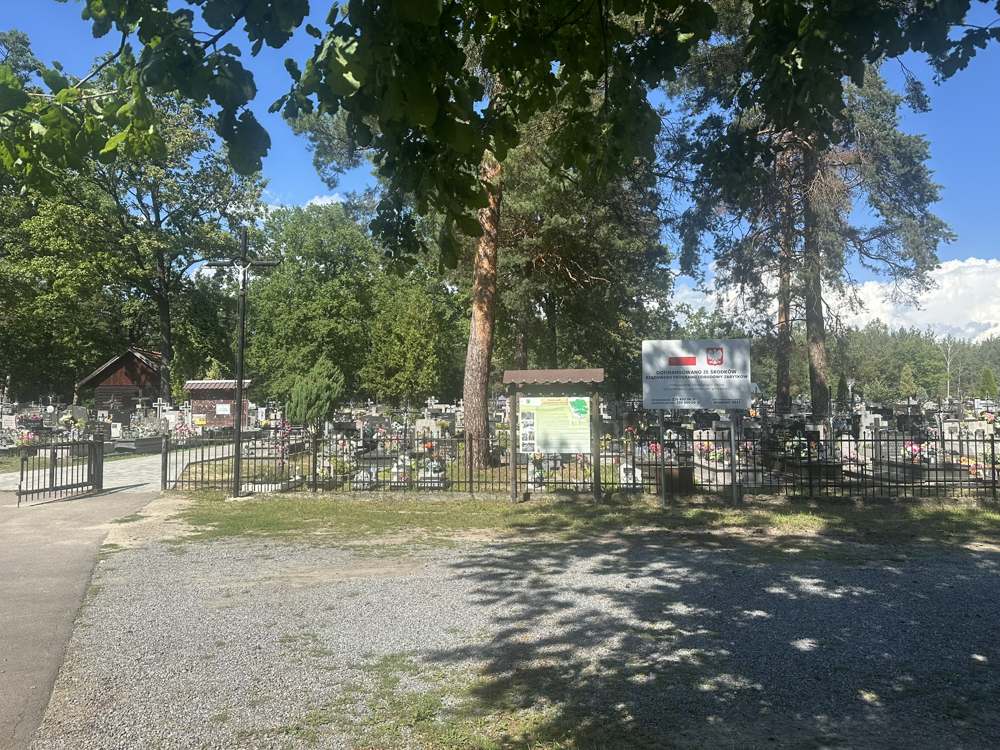
stone flowers ninety-two years on.Plate XI · The cemetery under the pines
Pysznica parish cemetery, ul. Podborek: 28 Pchełka graves, 86 Surowaniec, 55 Maziarz - and a
Mazur family plot tended as recently as 2016, meaning living kin, findable through the
parish.Plate XII · The kancelaria door
At the parish office where the books were opened - kancelaria hours Monday and Wednesday,
three to five, as they have no particular reason to change.
The ground itself
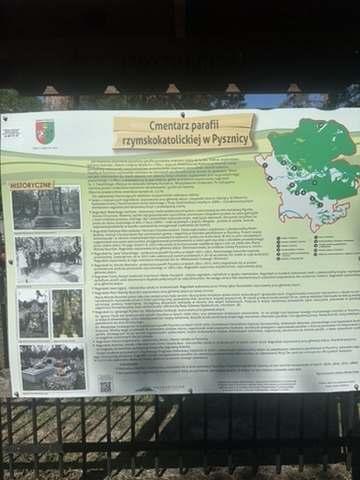
The cemetery's own history board fills in what the registers cannot. The parish buried its
dead beside the church until 1784, when Emperor Joseph II's decree pushed
cemeteries out of the settlements - so the ground on ul. Podborek has received this parish's
dead for some 240 years, and every family burial in this story's Polish chapters,
including the two little Katarzynas, lies somewhere in its 1.4 hectares. The board's
other footnotes read like the family's own margins: separate cholera cemeteries hidden
in the forest between Pysznica and Palenie mark the epidemics of 1820, 1849, 1855 and 1880 -
the plagues Jakub Pchełka's generation grew up dodging; the oldest stones carry
bullet marks from the wars that crossed this ground; and among the historic graves
lies Wincenty Jachim, a Pysznica farmer elected in July 1889 - the month after
Aniela was born - as the first peasant deputy from Nisko county to the Galician Sejm, and
Maria Wanda Bourdon, who ran secret schooling here through the German
occupation as a member of the Home Army. The priests of the family's story, Pyzik and Szubarga,
rest among their parishioners.
Plate XV · The cemetery's own history
The information board at the gate, photographed 20 August 2026 - founding decree, historic
graves, cholera grounds, bullet scars: a village's whole memory on one panel.
Where they lie
Andrzej & Aniela · Garfield
Saint Peter's Greek Catholic
Cemetery, Garfield NJ - the burial listings read Andrew Pelka 1878–1941 and Nellie
Pelka 1889–1967, side by side, in the cemetery family memory named. No stone photograph
exists yet: the first family visit with a camera confirms this page.
The Pysznica grave · 277
Sector A
(GPS 50°34'45.91"N 22°6'59.47"E - cemetery record):
Aniela Pchełka, 1889–1959. A kinswoman, our Aniela herself, or a memorial raised for the
emigrant: mystery No. 1. Still tended; the 1959 death act names whoever lies there.
Katarzyna & Katarzyna
The aniołki lie in this cemetery,
1907 and 1909 - in the manner of children's burials, under wooden crosses long since gone.
The ground is known; the spot never will be.
Jakub & Katarzyna Pchełka · not yet found
Died 1924 and 1885,
almost certainly buried here; no marker survives in the cemetery index. The burial register
at Sandomierz may record the plot.
Jan Maziarz & Katarzyna Mazur · not yet found
Aniela's
parents, dead by 1926, house 224. Same ground, no surviving marker found yet.
The oldest generation
Tomasz & Elżbieta, the Surowaniec,
Maziarz and Mazur elders - buried here in the age of wooden crosses. No trace expected;
their monument is the register.
Jan Mazur, 1860–1934
Sector D, grave 1612
(cemetery record) - probably not
Aniela's father (her mother was widowed by 1926), but plausibly her mother's kin, and the
village's Mazur/Maziarz spelling drift keeps the question alive; tended to this day.
Grandpa John & Grandma Pat
Their resting places belong to
the family's living memory - a line for the family to add to this page.
The family, in effect, never left the parish - about 150 Pchełkas remain on earth, and the densest cluster still lives within an hour's walk of house 224.
For the record
Mysteries & family lore
What we believe, what we suspect, and what would settle each question.
1. The grave in Pysznica Open
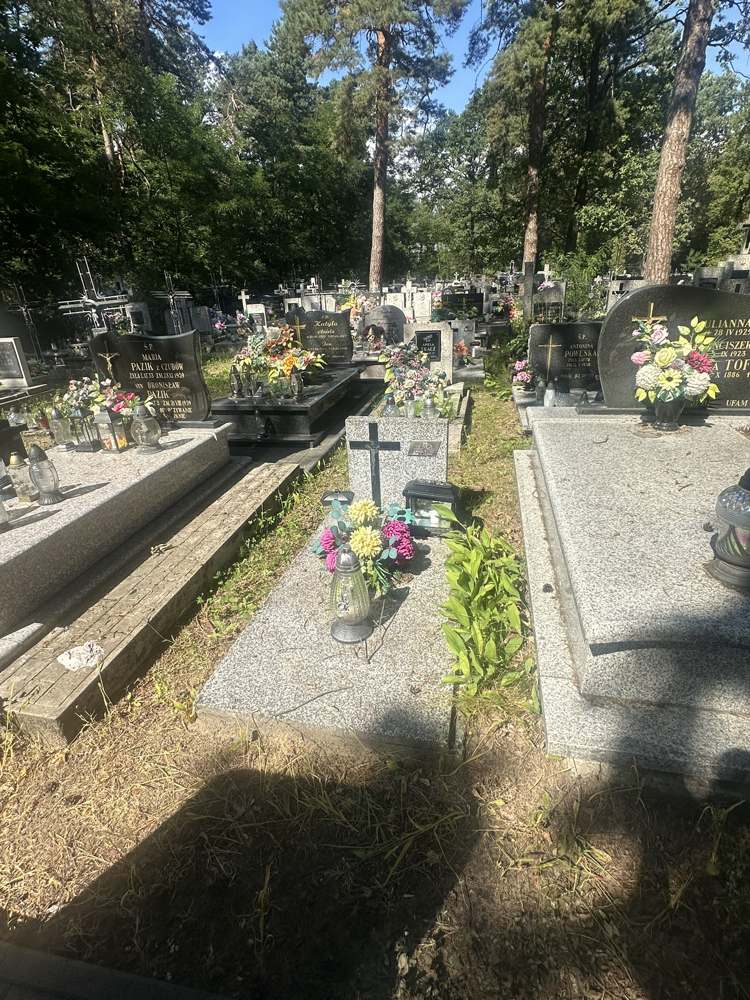
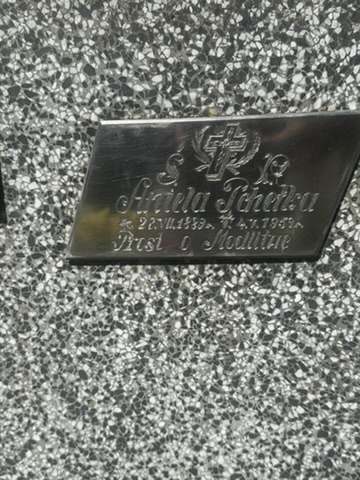
In Sector A of the Pysznica cemetery stands a small tended grave with a steel plaque:
"Ś✝P Aniela Pchełka … Prosi o Modlitwę", she asks for a prayer. Born 1889, the same
year as our Aniela, dead 4 July 1959. Who lies under it is a real question with three honest
answers. It may be a same-named kinswoman of the village cluster; the cemetery holds several
Aniela Pchełkas, and the plaque's birth date (28 July) sits five weeks off from our Aniela's
(18 June). It may be our Aniela herself; the birth year matches exactly, and a date carved on
a replacement plaque decades later is easily wrong by weeks. Or it may be a memorial raised in
the home parish for the emigrant who died across the ocean, a thing Polish families did for
those they could not bury. Set against it is the American record: the burial listings of
Saint Peter's Greek Catholic Cemetery in Garfield, the very cemetery family
memory named, carry Andrew Pelka, 1878–1941 and Nellie Pelka, 1889–1967,
husband and wife, with children including Violet and Bruno. Those listings point to New
Jersey, but they hold year-only dates and no photographs, so neither side of the ocean is
proven yet. What decides it: the parish's 4 July 1959 death act in Pysznica, which names the
deceased's parents or husband; a photograph of the Garfield stones; and Nellie's 1967 New
Jersey death certificate. Whoever she was, someone still brings the Pysznica grave flowers.
Plate XIII · Sector A, grave 277
The grave itself: small, grey, a black cross - and tended. Fresh flowers, a lantern. Whoever
she was, someone living still keeps her.Plate XIV · "Prosi o Modlitwę"
The steel plaque: Ś✝P Aniela Pchełka … she asks for a prayer. Photographed
20 August 2026 by a descendant of an Aniela Pchełka - whether this one, the next document
will tell.
2. Mazur or Maziarz Resolved
Her birth act of 18 June 1889 (house 106) settles it: father Jan Maziarz,
mother Katarzyna née Mazur. Both family spellings were true all along - the
papers kept her father's name, the Wall of Honor kept her mother's. The act even names her four
grandparents, among them another Katarzyna Surowaniec: the same few village families, braided
on both sides of the tree. One consequence follows for the tended "Jan Mazur 1860–1934" grave
in Sector D: probably not her father's, since her mother died a widow in 1926, before this
Jan died - but the village's habit of swapping Mazur and Maziarz between records means it is
not closed, and he may in any case be her mother's family.
3. Where Andrzej is buried Found
Saint Peter's Greek Catholic Cemetery, Garfield - per the memorial index:
Andrew Pelka, 1878–1941, beside Nellie. The family memory of "a Greek Catholic cemetery in
Garfield" was precisely right, down to the parish. His death in 1941 also re-dates Aniela's
widowhood: she raised the youngest children alone through the war years. What remains is a
visit with a camera, since no photograph of the stones exists yet, and the 1941 death
certificate, which would give the exact date and cause.
4. The vindication of "PHETKA" Documented
Family lore held various theories about the "real" name - Pełka, Pałka. The truth outran all
of them: the name was Pchełka, of Kłyżów, and Grandma Pat's phonetic spelling was nearly perfect
all along. Lesson, recorded for the next researcher: trust the first generation's ear.
5. Corrected beliefs Retired
"They married around 1919 in New Jersey" - refuted; they married 1 March 1905 in Pysznica,
and Aniela arrived in 1910 already five years a wife. "The records burned in 1914" - the church
burned; the books survived. "Aniela was from Wólka Tanewska" - she was from Kłyżów. Each
correction came from a primary record, and each retired theory is preserved in the research
files, because knowing where the road forked is part of the map.
6. Lore still standing Lore
That Andrzej worked the Garfield wool mills (overwhelmingly likely; unproven until a census
or directory line says so). That the 1950 Garfield Pelka cohort are all Jan's brothers (the
clustering says yes; birth certificates would say for certain). That the family sent money home
(the Dąbrówka church near Kłyżów raised its bell tower in the 1920s on parish emigrants' dollars
- whether any were Pchełka dollars, no record yet says).
Sources & honesty
A note on all this
What is solid
Andrzej Pchełka's birth: 21 November 1877, house 153, Kłyżów; parents Jakub Pchełka and
Katarzyna Surowaniec; grandparents Tomasz Pchełka & Elżbieta Wiercińska and Jakub
Surowaniec & Marianna Słomienna. (Pysznica Liber Natorum, entry 44/1877, photographed.)
The marriage act itself, 1 March 1905, Kłyżów - with her father's consent recorded and
witnesses Wojciech Maślach and Jan Surowaniec signing X. (Pysznica register, read in the
LubGens photographic archive.)
Aniela's birth act: 18 June 1889, house 106, daughter of Jan Maziarz and Katarzyna née
Mazur - with all four of her grandparents named. The two Katarzynas, 1906–1907 and 1908–1909,
the second dying of measles. (Status animarum entry 551 + register acts.)
Katarzyna Surowaniec-Pchełka's death of consumption, 11 April 1885, aged 34; Jakub
Pchełka's death, 22 January 1924, house 153; Aniela's mother's death as a widow at house 224,
1 October 1926.
Andrzej's crossing: SS Prinz Friedrich Wilhelm, Bremen → New York, arrived
23 March 1909, six Pchełkas of Kłyżów on one manifest page. (NARA T715, roll 1223, frame 175.)
Aniela's crossing: SS Friedrich der Grosse, arrived 30 November 1910, line 1,
"going to husb. Andrzej Pchelko." (NARA T715; photographed at Ellis Island.)
Jan "Jasiek" Pelka b. 13 May 1920 (Garfield/Paterson); Władysława Patryn b. 28 Nov 1920
(Bayonne); and the 1950 census read from the image: John the diner proprietor at 19 Frederick
Place, Bergenfield, with Pat, baby John T., and the widowed Aniela in the household; his
brothers George, Frank and Joseph in one three-family house at 70 Scudder Street, Garfield.
The village, parish, and wartime history of Kłyżów and Pysznica, from Polish diocesan,
municipal and scholarly sources - each claim carried into this page with its citation kept in
the research files.
What is less certain
The Jakub × Katarzyna marriage (~1870s) still sits in an indexing gap - the registers at
Sandomierz would settle it, and the books simply keep going back from there (to 1760).
Andrew's 1941 and Nellie's 1967 dates rest on the cemetery memorial index - consistent
with every other record, but no stone photograph or death certificate is in hand yet.
The Jan Patryn 1900 arrival; and everything about Maria Zając, whose name is too common to
find without her marriage or birth record.
What is background, not record
Infant-mortality rates, wedding seasons, steerage conditions, mill wages, the texture of
Lasowiacy life - regional history, not claims about a particular Pchełka. It is here because
you cannot picture a person standing in a landscape you cannot picture.
Corrections worth having
The priest's plaque reads "duszpasterz 1939–1991": Szubarga arrived as curate in April
1939 - the year the war began, which is rather the point - and was pastor from 1942. The
priest of the family's own era was his predecessor, Ks. Ignacy Pyzik (1906–1942).
The field-day reading of the Sector A plaque ("d. 196[3]") was wrong: the stone reads
4 July 1959, and its birth month is July, not June - details that keep mystery No. 1 honest.
"Grandma's note spelled the name wrong" - retired permanently. PHETKA was the truest
record in the family's hands.
If anyone wants to go further
Visit Saint Peter's Greek Catholic Cemetery, Garfield, with a camera - Andrew and
Nellie's stones have never been photographed for the record; order the 1941 and 1967 death
certificates while you're at it.
Write to Pysznica for the 4 July 1959 death act of the namesake Aniela in grave
277 - it names her family, who are in all likelihood our cousins.
Order from the Sandomierz archive (AP Kielce, Oddział w Sandomierzu, ul. Żydowska 4):
the Jakub × Katarzyna marriage (~1870s), and the elder generations backward from 1877 - the
books run to 1760.
Open two manifest images (any free FamilySearch account): Andrzej's 1909 page - who
paid, whom he joined, the address; and Aniela's 1910 page - the same address, legible at last.
Four phone calls to the Garfield/Lodi/Saddle Brook cemetery offices for the Pelka plot.
Ask Pysznica parish (kancelaria Monday & Wednesday 15:00–17:00) for the names of
the living families who tend the Pchełka, Maziarz and Surowaniec graves. They are cousins.
A DNA kit from any male Pelka would lock the line genetically against the Kłyżów
cluster - and the Pchelka family of Chautauqua County, New York, who kept the full spelling,
may be kin worth writing to.
Chiefly: the Pysznica parish
registers and status animarum (photographed 20 August 2026); the Ellis Island passenger archive
(NARA T715); the Pysznica cemetery index; Geneteka and the Polish state archives' indexes; the
diocesan histories of Sandomierz; and the municipal and scholarly literature of Galicia, each
citation preserved in the family research files. Set in EB Garamond. The photographs are the
family's own, taken at Ellis Island and in Poland, August 2026.